
Foot and Ankle Conditions in Missoula, MT
Specialties
Specialized Care for Conditions Affecting the Foot and Ankle in Montana
Foot and ankle conditions can make it hard to stay active, enjoy your daily routine, or even take a step without discomfort. At Northern Rockies Orthopaedic in Missoula, Montana, we help patients find real relief from persistent foot or ankle pain.
Whether you’re dealing with an ankle sprain, Achilles tendon injury, or chronic pain, our Missoula foot and ankle specialists are here to help. We treat everything from common injuries to long-term conditions affecting the foot and ankle. Our team offers personalized care plans that may include physical therapy, custom orthotics, or surgical repair if needed.
Don’t let foot and ankle problems keep you from doing what you love. Call Northern Rockies Orthopaedic at (406) 728-6101 or contact us online to seek treatment today.
Understanding Foot & Ankle Pain
Pain in the foot or ankle often starts from everyday wear, repetitive stress, or an injury that affects the soft tissue, bones, or joints. Conditions like plantar fasciitis, inflammatory arthritis, flat feet, and Achilles tendon problems are some of the most common reasons patients experience discomfort. This pain may feel sharp, burning, or constant, especially in areas like the heel bone, ankle joint, or big toe joint. Our orthopedic experts in Missoula help patients understand what’s causing their pain and provide targeted care to restore comfort and mobility.

Ankle Problems Treated at Northern Rockies Orthopaedics
At Northern Rockies Orthopaedic, our foot and ankle surgeons treat a wide range of ankle problems, from sudden injuries like an Achilles tendon rupture to long-term issues such as rheumatoid arthritis. Whether you’re dealing with chronic pain, ankle instability, or stiffness in the ankle joint, we create personalized foot and ankle treatment plans to help you move without discomfort. Below are some of the most common ankle conditions we treat.
Achilles Tendon Injuries
The Achilles tendon is a thick band of tissue that connects your calf muscles to your heel bone, and it is one of the most commonly injured tendons in the lower leg. Sudden movements, overuse, or a traumatic injury can cause tears, inflammation, or even a complete tendon rupture. You may feel intense pain in the back of your ankle, notice swelling, or hear a pop at the time of injury. If an Achilles tendon injury is left untreated, it can lead to long-term problems that may affect your ability to walk or bear weight on the affected leg.
Achilles Tendinopathy
Achilles tendinopathy is a degeneration-based condition that happens when the Achilles tendon is exposed to long-term repetitive stress or overuse. Instead of healing properly, small tears in the tendon begin to break down the tissue over time, leading to a gradual loss of strength.
Patients with Achilles tendinopathy often notice a thickening of the tendon, persistent pain, and stiffness near the back of the ankle joint or along the calf muscles. Because it develops slowly, many people ignore the early signs until the condition limits daily movement or performance.
Achilles Tendinitis
Achilles tendinitis is a type of inflammation usually caused by repetitive stress or a sudden increase in physical activity. You may experience heel pain, swelling, and stiffness, especially first thing in the morning or after activity.
Ankle Sprains and Chronic Instability
An ankle sprain happens when the ligaments that support the ankle joint stretch or tear, usually from a sudden twist or awkward step. Symptoms include sudden sharp pain, swelling, and bruising. Without proper care, repeated sprains can lead to chronic pain or long-term ankle instability.
Ankle Arthritis and Degeneration
Ankle arthritis occurs when the cartilage that cushions the ankle joint wears down, often due to aging or past traumatic injury. As the cartilage breaks down, the bones in the joint begin to rub against each other, causing persistent pain, stiffness, and swelling. This degeneration can make it harder to walk, especially after long periods of rest or activity.
Common Foot Conditions We Manage in Missoula, MT
Your feet play a significant role in balance, stability, and everyday movement, so when foot pain develops, it can quickly interfere with your routine. At Northern Rockies Orthopaedic, we treat many common foot conditions for patients across Montana, using proven treatments to restore comfort and mobility.
Chronic Pain & Instability
Some patients live with chronic pain in the foot that doesn’t improve, even with rest or basic care. This ongoing discomfort can result from old injuries, nerve tissue problems, or structural issues like flatfoot deformity or high arches. Symptoms often include aching, burning pain, stiffness, swelling, and a feeling of instability when walking or standing for long periods.
Fractures and Overuse Injuries
Fractures and overuse injuries are frequent sources of pain in the foot, ankle, and toes, especially in people who are active or spend a lot of time on their feet. Stress fractures are small cracks in the bone and typically cause sudden sharp pain, swelling, and tenderness in the injured area. Overuse injuries in the foot occur when repeated strain is placed on bones, joints, or soft tissue without enough time for recovery.
Hallux Rigidus (Arthritis of the Big Toe Joint)
Hallux rigidus is a type of arthritis that affects the big toe joint. It causes the joint to become stiff and painful, especially when walking, standing, or bending the toe. This condition develops when the cartilage in the joint wears down, leading to bone-on-bone friction, swelling, and sometimes the formation of bone spurs. People with hallux rigidus often notice persistent pain in the big toe, difficulty wearing certain shoes, and a limited range of motion in the toe.
Plantar Fasciitis
Plantar fasciitis is one of the most common foot conditions we treat. It occurs when the thick band of tissue that connects your heel bone to the front of your foot (plantar fascia) becomes irritated or inflamed. It can be caused by overuse, having flat feet or high arches, or wearing ill-fitting shoes. People with plantar fasciitis typically feel sharp heel pain, especially with their first steps in the morning or after resting.
Morton’s Neuroma and Nerve Compression
Morton’s neuroma is a benign growth of nerve tissue that develops between the third and fourth toes. It’s sometimes called a pinched nerve and causes symptoms like burning pain, tingling, or numbness in the ball of the foot or toes. Many people describe it as feeling like there’s a pebble or wrinkle in their sock. Without proper treatment, it can lead to persistent pain and limit daily activity.
Diabetic Ulcers
Diabetic ulcers are open sores or wounds that typically form on the bottom of the foot or around pressure points. They occur when high blood sugar levels damage nerve tissue and blood vessels, leading to reduced sensation and poor circulation. As a result, minor cuts or blisters may go unnoticed and fail to heal correctly. These untreated injuries can develop into painful ulcers over time.
Bunions and Hammertoe
A bunion, also called hallux valgus, is a bony bump that forms at the base of the big toe. This occurs when the first metatarsal bone is misaligned, causing the big toe to shift toward the other toes. When left unaddressed, the misalignment can affect the way you walk and put pressure on nearby joints.
Hammertoe is a condition where the second, third, or fourth toe bends abnormally at the middle joint, causing it to curl downward instead of lying flat. Hammertoe can lead to persistent pain, stiffness, and difficulty finding comfortable shoes.
Turf Toe and Sesamoid Injuries
Turf toe is a sprain of the big toe caused by forceful bending, usually during sports injuries. The injury affects the ligaments and small bones under the toe, known as the sesamoids. You might feel swelling, intense pain, or a reduced range of motion at the base of the toe. Sesamoid injuries can also develop gradually from overuse.
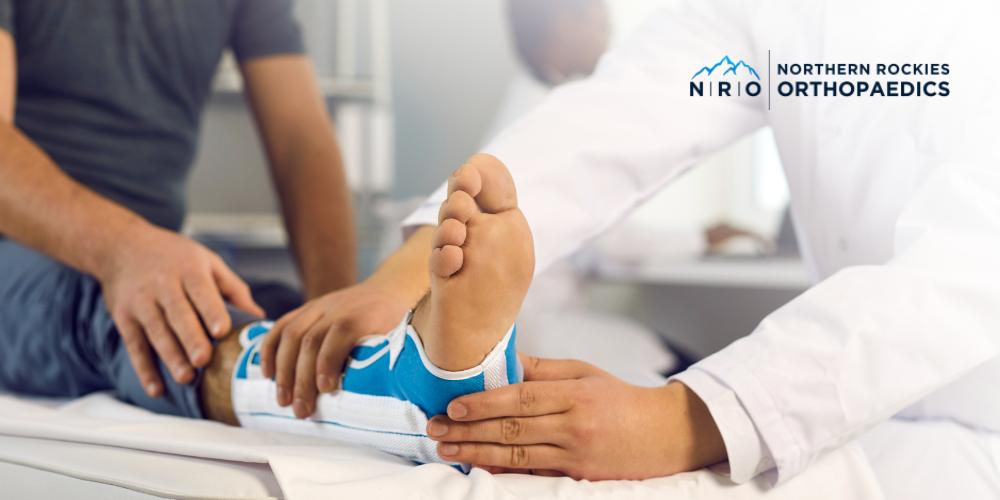
Nonsurgical Approaches for Foot and Ankle Pain at Northern Rockies Orthopaedic
Fortunately, many foot and ankle conditions can be successfully treated without surgery. At Northern Rockies Orthopaedic, our Missoula foot and ankle specialists offer a range of conservative treatment options to reduce inflammation, improve mobility, and help relieve pain.
Physical Therapy
Targeted physical therapy can strengthen muscles, restore joint movement, and support healing of soft tissue and tendons in the foot and ankle. Our skilled physical therapy team creates personalized rehabilitation plans that focus on reducing strain while also preventing future injury or flare-ups.
Custom Orthotics and Bracing
Custom orthotics and braces are used to improve alignment, reduce strain, and support healing in patients with conditions like flatfoot deformity, plantar fasciitis, or ankle arthritis. Orthotics are molded inserts that help correct foot structure and relieve pressure, while braces offer added stability for the ankle joint.
Medications and Injections for Pain Management
Anti-inflammatory medications are commonly used to reduce swelling and discomfort caused by foot and ankle problems. These medications help manage chronic pain by calming irritated soft tissue and making it easier to move without aggravating the injured area.
Lifestyle Changes and Activity Adjustments
Simple changes can make a big difference in reducing foot and ankle pain. This may include switching to comfortable shoes, avoiding high heels, limiting long periods of standing, and managing body weight to reduce stress on the heel bone and ankle joint. We’ll help you identify habits that may be contributing to persistent pain and suggest healthier alternatives.
Common Foot and Ankle Surgeries in Missoula, Montana
Some foot and ankle conditions may require surgery when nonsurgical treatments no longer help or the damage is too severe. Our team of orthopedic surgeons in Missoula offers a full range of advanced procedures to treat foot and ankle conditions, including those caused by injury, arthritis, or structural deformity. We focus on restoring movement, improving stability, and helping patients find long-term relief.
Minimally Invasive Foot and Ankle Procedures
Minimally invasive procedures use small incisions and specialized tools to treat foot and ankle conditions with less disruption to surrounding soft tissue. After minimally invasive surgery, patients usually experience faster recovery and less post-operative pain. These techniques are typically used for treating tendon problems, bone spurs, or correcting mild deformities.
Arthroscopic Ankle Surgery
Arthroscopic surgery is a type of minimally invasive procedure that involves inserting a tiny camera into the ankle joint to treat conditions like ankle arthritis, loose bone fragments, or cartilage damage. It allows us to treat the problem while minimizing trauma to the joint, making it ideal for removing scar tissue, repairing ligaments, or reducing inflammation.
Reconstructive Ankle Ligament Surgery
When ligaments become stretched or torn from repeated ankle twists and sprains, the joint can become unstable. Reconstructive ligament surgery tightens or rebuilds these ligaments to restore strength and prevent future injury or chronic instability.
Surgical Correction for Bunion and Hammertoe
We perform bunion and hammertoe surgeries to correct deformities that affect the alignment of the toes. Bunion surgery realigns the big toe joint and removes excess bone, while hammertoe surgery straightens a bent toe at the middle joint. Both procedures reduce pressure and improve foot function.
Achilles Tendon Repair
When the Achilles tendon is torn or severely damaged, surgical repair may be needed. Achilles tendon repair surgery reconnects the tendon to the heel bone and helps restore strength and function in the lower leg.
Ankle Fusion and Ankle Joint Replacement
For patients with advanced ankle arthritis, we may recommend ankle fusion or joint replacement surgery. Ankle fusion stabilizes the joint by permanently joining the bones, while ankle replacement involves replacing the damaged ankle joint with an artificial one. Both options help reduce chronic pain caused by worn-out cartilage.
Traumatic Injury and Fracture Repair Surgery
Serious foot or ankle fractures may require surgery to properly stabilize the bone. Using screws, plates, or pins, we secure the injured area to promote healing, restore mobility, and reduce the risk of foot and ankle problems down the line.
Revision Surgery
Sometimes, a previous surgery doesn’t fully heal or causes new complications in the foot or ankle. In these cases, revision surgery may be needed to correct the problem. This type of procedure addresses issues such as lingering pain, instability, or improper healing that may interfere with mobility or daily function. By carefully correcting the underlying problem, revision surgery allows patients to restore joint stability and regain foot or ankle function.

Find Foot and Ankle Pain Relief at Northern Rockies Orthopaedic
If you’re struggling with foot or ankle pain, Northern Rockies Orthopaedic can help you find real, lasting relief. Patients throughout Montana trust our Missoula-based team because we take a thoughtful, personalized approach to care, offering both nonsurgical treatments and advanced surgeries tailored to your needs. Whether you’re dealing with chronic pain or a traumatic injury, our Missoula foot and ankle specialists are ready to help you.
Call Northern Rockies Orthopaedic at (406) 728-6101 or contact us online to schedule your visit today.
Patient Testimonials
Move Better. Feel Better. Perform Better.
We are committed to high quality orthopedic healthcare and implementing innovative, value-added solutions to deliver compassionate, patient-centered healthcare.