
Foot and Ankle Arthritis Missoula, Montana
Specialties
Foot and Ankle Arthritis Specialists Serving Western Montana
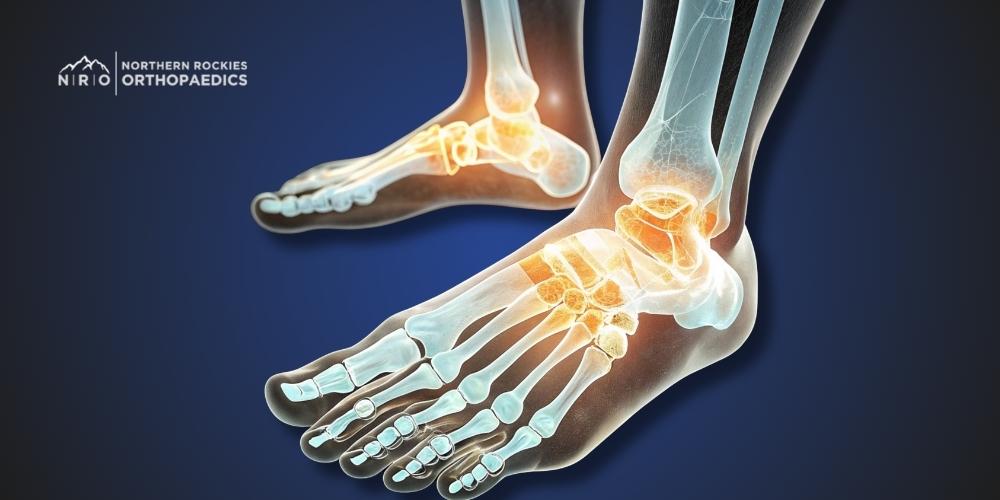
The foot and ankle specialists at Northern Rockies Orthopaedics provide expert arthritis care for patients in Missoula and surrounding Montana communities. Using advanced imaging and a full range of treatments, our orthopedic surgeons create personalized plans to relieve pain and restore mobility. Whether you’re facing early signs or managing advanced arthritis, we’re here to help you get back on your feet.
Don’t let foot and ankle pain limit your life. Call (406) 728-6101 or contact us online to schedule your consultation today.
Types of Arthritis in the Feet and Ankles
Several distinct types of arthritis can develop in the foot and ankle, each with different causes and requiring specific treatment approaches. Understanding which form of arthritis affects your joints helps our foot and ankle specialists in Missoula, Montana, develop the most effective treatment options for pain relief and improved function. The most common types include osteoarthritis from cartilage wear, rheumatoid arthritis and other inflammatory conditions, post-traumatic arthritis from previous injuries, and arthritis affecting specific areas, such as the big toe or midfoot bones.
Foot and Ankle Osteoarthritis
Osteoarthritis is the most common form of foot and ankle arthritis, occurring when cartilage wears down naturally over time due to age-related degeneration. This “wear and tear” arthritis typically affects weight-bearing joints where cartilage cells break down faster than the body can repair them, leading to bone spurs, stiffness, and chronic joint pain. The condition often develops in the ankle, subtalar, and metatarsophalangeal (MTP) joints at the base of the big toe, causing increased pain during activity and after periods of rest. As osteoarthritis progresses through its early stages to severe cases, patients experience reduced range of motion, difficulty walking on uneven ground, and increasing foot pain that impacts daily activities.
Rheumatoid Arthritis in Ankle and Foot
Rheumatoid arthritis is an autoimmune condition in which the immune system mistakenly attacks the body’s own tissues, particularly the soft tissues lining the small joints of the foot and ankle. This inflammatory arthritis typically affects the same joint on both sides of the body, causing symmetrical pain, swelling, and morning stiffness that improves with movement.
Unlike osteoarthritis, rheumatoid arthritis can rapidly damage cartilage and bones, even in younger patients, often affecting three joints in the foot simultaneously. Blood tests can confirm this systemic condition, which requires specialized treatment to reduce inflammation and prevent progressive joint deformities.
Psoriatic Arthritis in Feet
Psoriatic arthritis develops in some people with psoriasis, a skin condition, and causes inflammatory arthritis that commonly affects the toes, ankles, and other foot joints. This autoimmune condition causes swelling, pain, and stiffness in the affected joints, often resulting in a characteristic “sausage-like” appearance of the toes. The condition can cause nail changes, tendon inflammation, and bone damage if left untreated, making early diagnosis crucial for preserving joint function. Like rheumatoid arthritis, psoriatic arthritis requires medical management to reduce inflammation and prevent the immune system from causing more pain and joint destruction.
Post-Traumatic Arthritis
Post-traumatic arthritis develops after an injury, such as a fracture, dislocation, or ligament tear, that damages the cartilage inside the ankle or foot joints. Previous injuries or fractures to the ankle joint or foot bones disrupt the smooth cartilage surface, accelerating wear and causing arthritis to develop years after the initial trauma. Athletes and individuals who play sports face higher risk factors for this condition due to repetitive stress and acute injuries that compromise joint health. Even with proper initial treatment, damaged cartilage from significant injuries increases the likelihood that patients will develop arthritis in the affected area over time.
Big Toe Arthritis (Hallux Rigidus)
Big toe arthritis, medically known as hallux rigidus, affects the MTP joint where the big toe connects to the foot bone, limiting the toe’s upward motion needed for normal walking. This condition develops from osteoarthritis, repetitive stress from activities, or previous injuries, leading to bone spurs forming around the joint that restrict movement and cause pain. Patients experience foot pain when walking, especially when pushing off the ground, and may notice swelling, stiffness, and difficulty wearing certain shoes. As cartilage wears away in this critical joint, the big toe becomes increasingly rigid, altering gait and potentially causing more pain in other parts of the foot, ankle, and even the knees and hips.
Midfoot Arthritis
Midfoot arthritis affects the arch area, where the inner and outer midfoot bones articulate through multiple small joints that provide flexibility and shock absorption during walking. This form of foot arthritis commonly develops from post-traumatic arthritis following a Lisfranc injury, from osteoarthritis due to repetitive stress, or from inflammatory conditions like rheumatoid arthritis. The midfoot bone joints bear significant body weight with each step, so when cartilage wears in this region, patients experience pain in the arch that worsens with activity and standing. Swelling, difficulty walking on uneven surfaces, and a flattened arch appearance often accompany midfoot arthritis as the condition progresses.
Hindfoot Arthritis
Hindfoot arthritis involves the subtalar joint beneath the ankle joint and other articulations at the back of the foot where the three bones of the hindfoot connect. This condition limits the side-to-side motion of the foot needed for walking on uneven ground and can result from previous injuries, inflammatory arthritis, or degenerative changes over time. Patients with hindfoot arthritis experience ankle pain and stiffness below the ankle joint, often describing a deep, aching sensation that worsens with activity and improves with rest. The condition frequently coexists with ankle arthritis, and gait analysis often reveals compensatory walking patterns that may cause additional stress on other joints.

Symptoms of Ankle and Foot Arthritis
- Pain, swelling, and tenderness in the affected joints
- Stiffness and reduced range of motion in the ankle or toes
- Joint deformities or difficulty walking on uneven ground
- Morning stiffness or pain after periods of rest
What Are the Risk Factors for Developing Foot and Ankle Arthritis?
- Previous injuries or fractures in the ankle or foot
- Family history of arthritis or autoimmune disorders
- Age-related cartilage wear and tear
- Obesity or excess body weight placing stress on joints
- Repetitive activities or sports injuries
How Our Missoula Foot and Ankle Specialists Diagnose Arthritis
At NRO, we diagnose foot and ankle conditions in Missoula by first discussing your medical history and conducting a comprehensive physical examination to assess joint pain, swelling, range of motion, and areas of tenderness in your foot and ankle.
Diagnostic imaging tests also play a crucial role in confirming the diagnosis, with X-rays revealing joint space narrowing, bone spurs, and cartilage loss characteristic of arthritis. For complex cases, we may utilize magnetic resonance imaging (MRI) to evaluate soft tissues, cartilage damage, and inflammation, or order a bone scan to detect early arthritis changes before they appear on standard X-rays.
Blood tests help identify inflammatory arthritis, like rheumatoid arthritis or psoriatic arthritis, while gait analysis and other imaging tests provide additional information to develop the most effective treatment plan.

Conservative Treatment Options for Foot and Ankle Arthritis
Conservative treatment options provide effective pain relief for many patients with foot and ankle arthritis, particularly in the early stages when cartilage damage remains limited. These non-surgical approaches aim to reduce inflammation, improve mobility, and slow disease progression while preserving joint function for as long as possible.
Our Missoula foot and ankle specialists typically recommend starting with conservative measures before considering surgical interventions, as many patients achieve satisfactory results without the risks and recovery time associated with surgery.
Physical Therapy
Physical therapy helps patients improve mobility, strengthen supporting muscles, and reduce pain through targeted exercises and manual therapy techniques designed for arthritic joints. A skilled physical therapist develops a customized program that addresses your reduced range of motion, teaches proper gait mechanics, and incorporates stretching to maintain flexibility in stiff joints. Therapeutic exercises strengthen the muscles around the ankle and foot, improving stability and reducing stress on damaged cartilage while helping maintain a healthy body weight through increased activity.
Custom Orthotics or Bracing
Custom orthotics and shoe inserts redistribute pressure away from painful joints, correct biomechanical abnormalities, and provide cushioning that can significantly relieve pain during walking and standing. These devices are particularly effective for midfoot arthritis, big-toe arthritis, and hindfoot conditions, where proper arch support and motion control reduce stress on affected joints. Bracing options range from simple ankle sleeves that provide compression to rigid braces that limit motion in severely arthritic joints, helping stabilize the ankle and reduce inflammation.
Steroid Injections
Steroid injections deliver powerful anti-inflammatory medication directly into the affected joint, providing targeted pain relief that can last several months for patients with ankle arthritis or foot arthritis. These injections reduce inflammation in the joint space, decrease swelling of surrounding soft tissues, and temporarily improve range of motion, often allowing patients to participate more effectively in physical therapy. While steroid injections don’t cure arthritis or prevent cartilage from continuing to wear, they offer valuable symptom relief for patients not ready for surgery or those managing flare-ups of inflammatory arthritis.
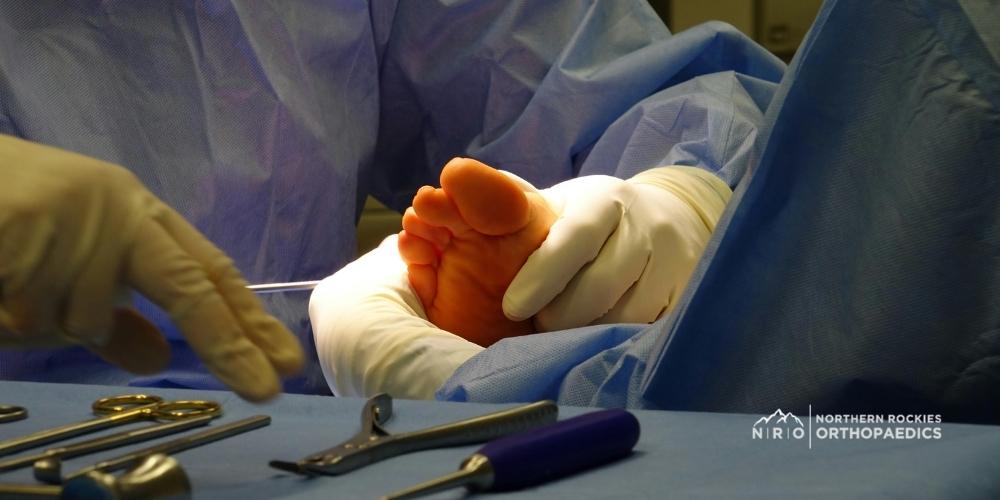
Foot and Ankle Surgeries for Arthritis Pain Relief
Surgical treatment options become necessary when conservative measures fail to provide adequate pain relief or when severe cases of arthritis significantly limit function and quality of life. Our orthopedic foot and ankle surgeons offer advanced surgical procedures to treat foot and ankle arthritis, ranging from minimally invasive arthroscopic techniques to joint reconstruction and replacement surgeries.
Ankle Arthroscopy
Arthroscopic surgery uses small incisions and a tiny camera to remove damaged cartilage and bone spurs, and clean out the inflammatory tissue causing pain in its early stages. This minimally invasive procedure can relieve pain and improve ankle function by removing mechanical irritants and debris that contribute to inflammation and catching sensations.
While arthroscopic surgery cannot restore damaged cartilage or cure advanced arthritis, it can delay the need for more extensive procedures in appropriately selected patients. Recovery from ankle arthroscopy typically takes several weeks, and many patients experience improved symptoms and reduced inflammation after this outpatient procedure.
Custom Orthotics or Bracing
Joint fusion, or arthrodesis, permanently joins the bones of an arthritic joint to eliminate painful motion, providing reliable pain relief for patients with severe ankle arthritis or foot arthritis. During this procedure, orthopedic surgeons remove remaining damaged cartilage, position the bones in optimal alignment, and secure them with plates, screws, or rods until they heal into a single solid bone. Although fusion sacrifices motion in the treated joint, it effectively eliminates the bone-on-bone contact causing pain and allows most patients to walk comfortably and return to many activities. This surgery commonly treats arthritic ankle joints, subtalar joints, and midfoot arthritis, where preserving motion is less critical than achieving pain relief and stability.
Joint Replacement Surgery
Joint replacement surgery removes damaged joint surfaces and replaces them with artificial components, preserving motion while eliminating the pain caused by bone-on-bone rubbing in severely arthritic joints. Ankle replacement has evolved significantly in recent years, offering selected patients with ankle arthritis an alternative to fusion that maintains ankle motion and produces more natural gait patterns. For the big toe, metatarsophalangeal joint replacement effectively treats severe hallux rigidus, restoring the toe’s ability to bend and improving push-off during walking. While joint replacement carries risks including infection and implant wear over time, many patients achieve excellent long-term outcomes with modern implant designs and surgical techniques that help them return to active lifestyles.
Ankle and Foot Arthritis: FAQ
How Do I Know If My Ankle Pain Is Caused by Arthritis?
Ankle pain from arthritis typically occurs with stiffness, swelling, and grinding sensations, especially after rest or in the morning, and gradually worsens over months or years rather than appearing suddenly. A physical examination and imaging tests performed by our orthopedic surgeons can definitively diagnose arthritis and distinguish it from other causes of ankle pain, such as tendinitis or ligament injuries.
When Should I See a Doctor for Chronic Ankle Pain or Stiffness?
You should see a doctor if ankle pain or foot pain persists for more than a few weeks, worsens despite rest and over-the-counter pain relievers, or significantly limits your ability to walk or perform daily activities. Early diagnosis allows for more treatment options to slow cartilage damage and relieve pain before arthritis progresses to severe cases requiring surgery.
Does Arthritis Cause Foot Pain When Walking?
Yes, arthritis commonly causes foot pain when walking because weight-bearing activities increase pressure and friction on joints where cartilage has worn away, leading to inflammation and bone-on-bone contact. The pain typically worsens with prolonged standing or walking and may improve somewhat with rest, though severe arthritis can cause constant discomfort even when not bearing weight.
How Successful is Foot Surgery for Arthritis?
Joint fusion and joint replacement surgeries have high success rates, with most patients achieving significant pain relief and improved function for many years. Success depends on factors including the specific procedure performed, the severity of arthritis, patient adherence to rehabilitation protocols, and maintaining a healthy body weight to reduce stress on surgically treated joints.

Get Back on Your Feet With Help From the Missoula Foot and Ankle Specialists at Northern Rockies Orthopaedics
At Northern Rockies Orthopaedics, our Missoula foot and ankle surgeons provide comprehensive arthritis care from initial diagnosis through conservative management and, when needed, advanced surgical procedures. Whether you’re dealing with osteoarthritis, rheumatoid arthritis, or post-traumatic arthritis, we develop personalized foot and ankle treatments in Missoula that address your specific symptoms and help you achieve your mobility goals. Call (406) 728-6101 or contact us online to schedule your appointment today.
Patient Testimonials
Move Better. Feel Better. Perform Better.
We are committed to high quality orthopedic healthcare and implementing innovative, value-added solutions to deliver compassionate, patient-centered healthcare.